

In 2025, 2197 formal reports of sexual harassment were made across the public sector.
Sexual harassment causes serious harm. Organisations must take urgent action to prevent and address it.
Experience of sexual harassment persists
The experience rate of workplace sexual harassment across the sector has remained persistent.
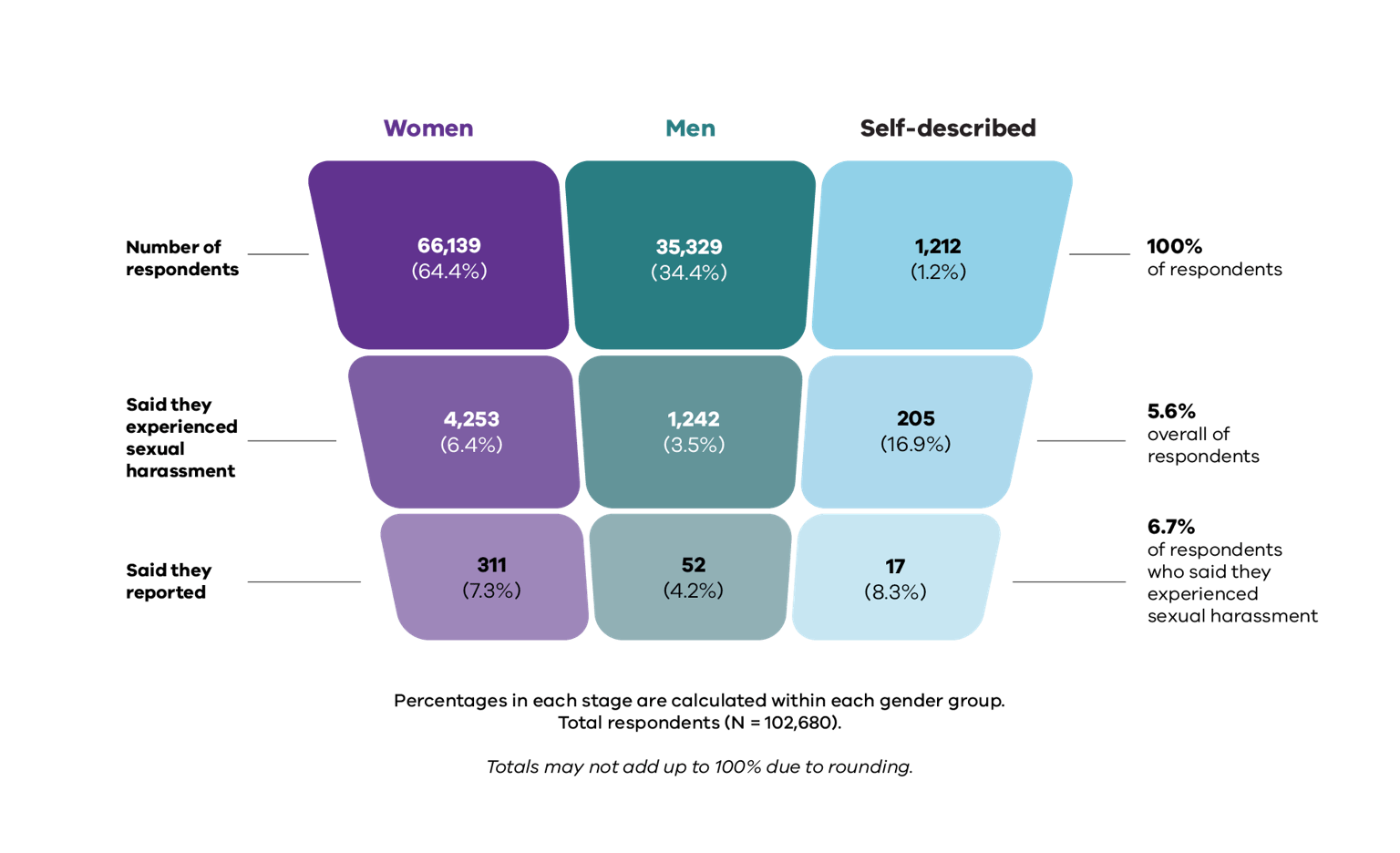
Employee experience surveys show that in 2025, sexual harassment was experienced across the sector by:
- Women: 6.4%
- Men: 3.5%
- Non-binary or gender-diverse people: 16.9%
Industries with highest rates of sexual harassment of women:
- Police and emergency services: 11.8%
- Transport: 10.6%
- Community and cultural services: 10.2%
Industries with highest rates of sexual harassment of men:
- Public health care: 6.1%
- Police and emergency services: 4.7%
- Local government: 4.6%
Groups experiencing compounded gender inequality
Some people experience more workplace sexual harassment:
- Women aged 15-24: 13.9%
- Women with disability: 11.7%
- First Nations women: 7.6%
- CARM women: 6.4%
Reporting gaps cause blind spots
Not everyone who experiences sexual harassment in the workplace formally reports it.
Some people do not report sexual harassment because they don’t know how to. Others don’t trust that the issue will be dealt with fairly.
In some cases, a person discloses to their manager, but the disclosure is never formally recorded or escalated.
When sexual harassment happens, but is not formally reported, it causes reporting gaps. Reporting gaps mean that leaders are making decisions on an incomplete picture of the risk in their organisation. They also mean people who have spoken up about sexual harassment to their manager may not be appropriately supported, and perpetrator behaviour may not be properly addressed.
Figure 8: Sexual harassment experience and reporting rates (employee experience survey data, 2025)
Reporting and experience rates considered together
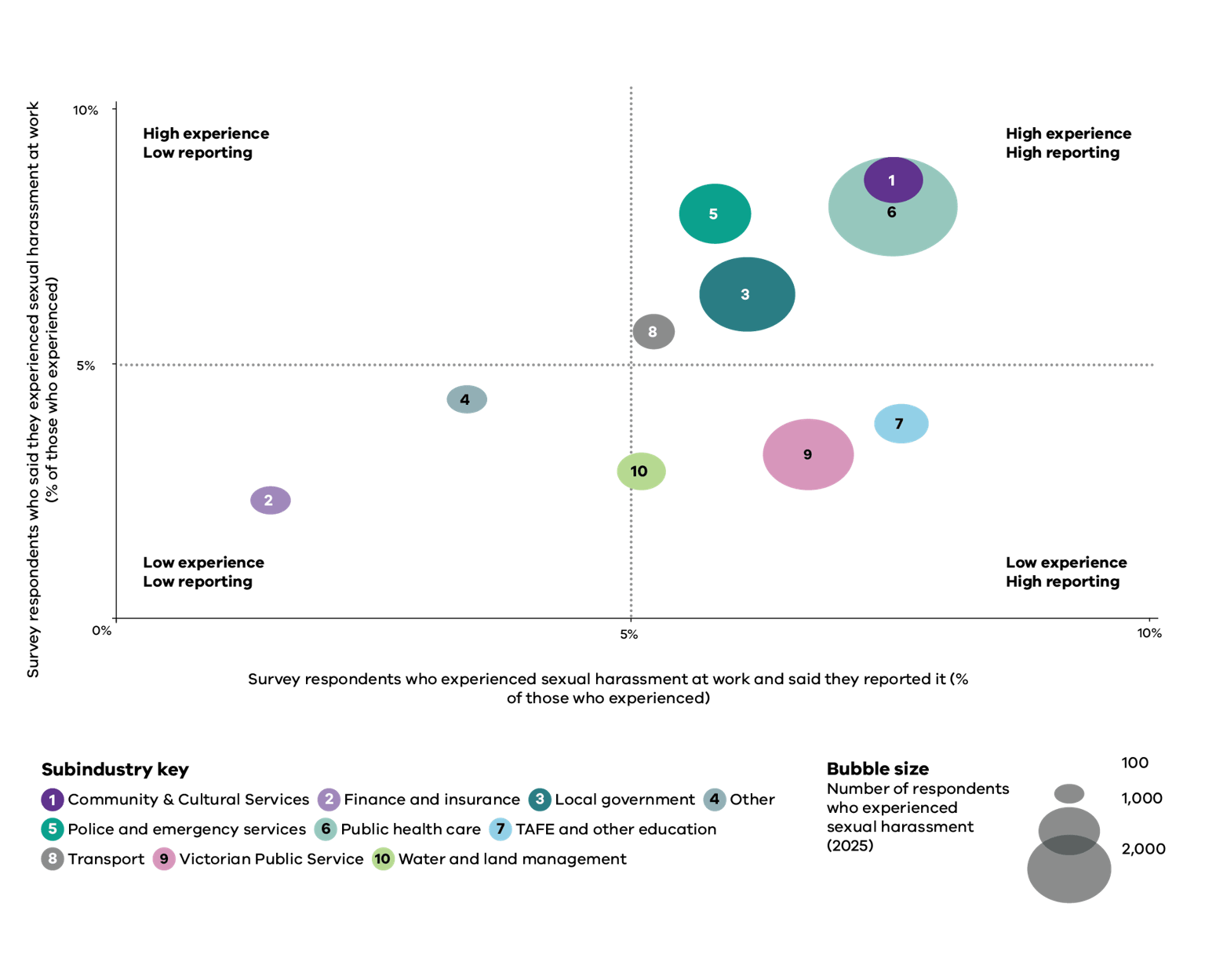
TAFE and other education and the Victorian Public Service have lower experience rates (3.8% for TAFE, 3.2% for VPS) and higher reporting rates (7.6% for TAFE, 6.7% for VPS) according to employee survey data. These industries have the strongest result when looking at both measures together.
Figure 9: Sexual harassment experience and reporting rates by industry (survey data, 2025)
Updated